Revive Restore Vintage
Vintage 1940s Austrian Alpine Horsehide Leather Car Coat
Vintage 1940s Austrian Alpine Horsehide Leather Car Coat
Couldn't load pickup availability
This Gustl leather jacket reflects the disciplined, material-led construction associated with 1940s Austrian civilian outerwear, shaped by a period where garments were built with purpose, restraint, and longevity in mind. Pieces of this type were produced for everyday wear in colder Central European climates, where protection from wind, rain, and sustained cold was essential. The cut carries a distinctly Alpine influence, with a lightly shaped waist and extended length through the body, giving the jacket both structure and ease of movement.
This approach sits within the wider development of early 20th century outerwear, where longer, protective leather coats emerged alongside open-air motoring and mountain travel. These garments were originally designed to shield the wearer from exposure while allowing freedom of movement, often cut with added length and high fastening collars. By the 1930s and 1940s, this functional foundation had evolved into more refined civilian jackets, retaining that protective character in a more controlled and wearable form.
Produced by Gustl, trading as Gnadig u. Strecker Lederbekleidung of Vienna’s 16th district on Thaliastrasse, this example sits within a tradition of smaller workshop manufacture. Garments bearing this label were not mass-produced, but constructed using established methods where material quality and proportion took precedence over output. The overall balance, detailing, and hardware firmly place the piece within the 1940s.
The leather is horsehide, dense and resilient with the tight grain structure typical of the period. It retains excellent structural integrity, with a naturally developed patina across the surface. Tonal variation is present throughout, particularly across the sleeves and body, where the colour shifts between deeper brown and warmer chestnut tones. The hide remains strong and supple, carrying surface character that reflects time and use without compromise.
The design aligns with civilian Alpine sportswear of the era. The front is clean and functional, with a single chest pocket and two angled hand pockets positioned for ease of access. The waist is subtly shaped, giving definition without restricting movement. This measured balance between structure and comfort reflects a broader shift seen across Europe during the interwar and wartime years, as outerwear moved from purely functional driving and outdoor garments into everyday use while retaining key protective features.
Hardware is consistent with period construction. The main front zipper is an OPTI unit, with pocket zippers marked Zipp, both in keeping with European production of the time. All components function correctly and sit naturally within the jacket.
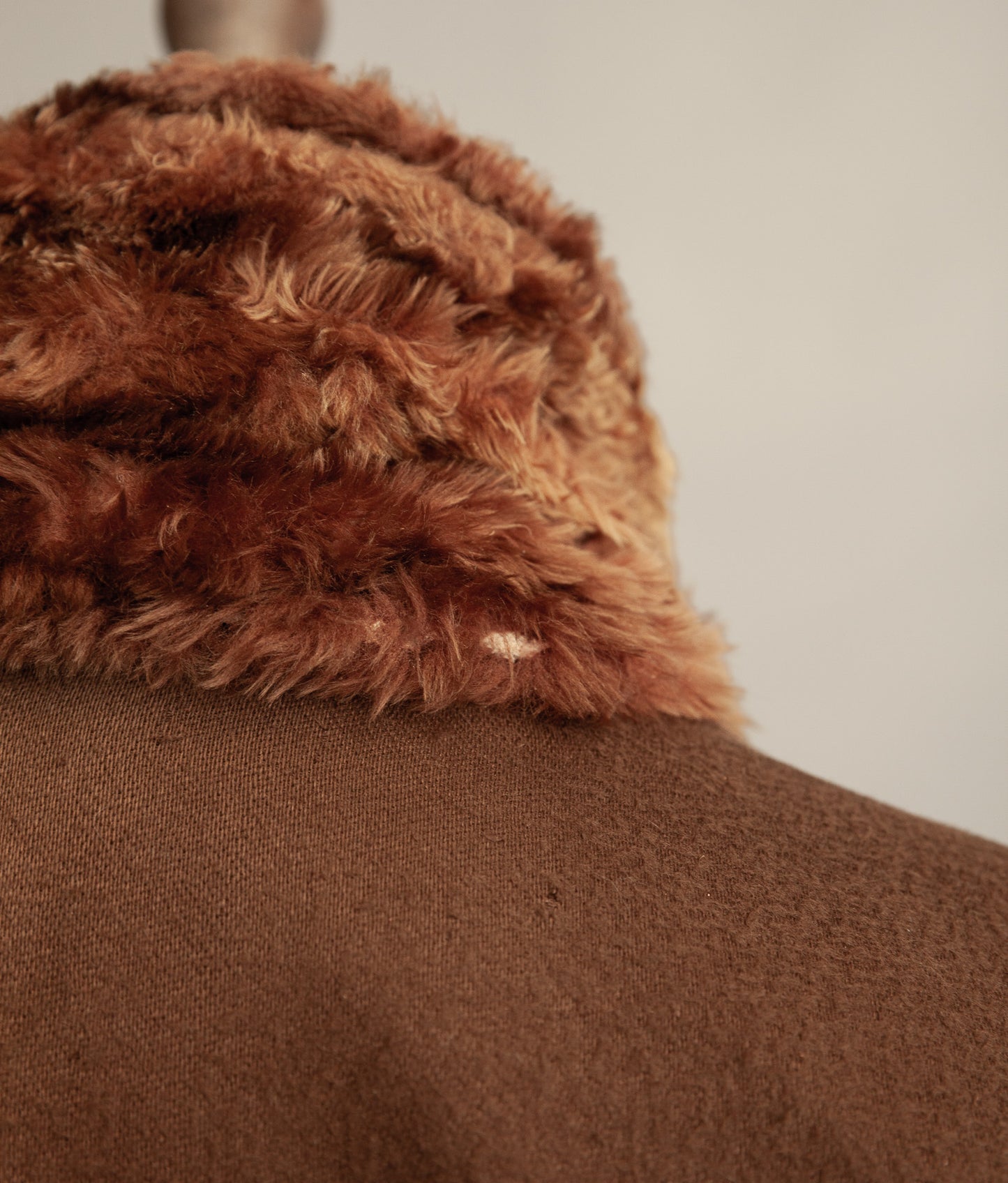
The collar is finished in wool, providing warmth and a softer contrast against the darker horsehide. This choice reflects a practical civilian approach, offering insulation without the weight and maintenance associated with fur while remaining well suited to everyday Alpine use. It had begun to show light age-related wear, and has since been carefully worked through to bring the fibres back into an even, settled state. It now presents cleanly, with improved structure while retaining its original character and natural feel.
Internally, the jacket is lined in brown cloth typical of the period. The lining shows signs of age, with historical repairs visible as shown in the images. These have been retained as part of the jacket’s working life rather than replaced, and remain secure and fully functional. The overall structure of the garment is unaffected, and it wears as intended.
Condition and Preservation
The jacket presents in very good condition for its age. The horsehide remains structurally sound with a consistent, well-balanced handle throughout. It retains its natural strength without dryness or brittleness, and the surface shows controlled ageing consistent with a well-used but well-preserved 1940s hide. The grain remains stable, with wear sitting at surface level rather than indicating any deeper fatigue.
The jacket has been professionally cleaned and conditioned in our workshop using established methods developed through long-term leather restoration work. The approach is deliberately restrained, focusing on preserving the original tone and natural patina rather than altering the character of the hide. The leather now sits in a stable, wearable condition with good flexibility and balance.
The internal lining shows age-related repairs which remain secure and fully functional. These have been retained as part of the jacket’s history and do not affect wearability.
Overall, the jacket is clean, sound, and ready for continued use, with its age reflected honestly through surface character rather than structural compromise.
A well preserved example of Austrian workshop leatherwear in horsehide, carrying forward the practical design language of early European motoring and Alpine outerwear, where garments were shaped first by environment and use, and only second by style.
Key Identifying Features
• 1940s Austrian leather sports jacket
• Gustl label – Gnadig u. Strecker Lederbekleidung, Wien XVI
• Horsehide construction with developed natural patina
• OPTI main front zipper
• Zipp metal pocket zippers
• Wool collar, professionally refreshed
• Lightly tailored waist with controlled silhouette
• Angled hand pockets and single chest pocket
• Brown cloth lining with period repairs
• Traditional Viennese workshop construction
• Strong seams and stable structure
Garment Measurements Laid Flat
• Chest (armpit to armpit): 22 inches
• Shoulders (seam to seam): 18.5 inches
• Sleeve length (shoulder seam to cuff): 26 inches
• Sleeve length (underarm seam to cuff): 17 inches
• Back length (collar seam to hem): 28 inches
Best suited to a 40 inch chest for a regular fit. Please compare these measurements with a similar jacket to ensure correct sizing.