Revive Restore Vintage
Vintage 1940s German Horsehide Leather Officer Trench Coat
Vintage 1940s German Horsehide Leather Officer Trench Coat
Couldn't load pickup availability
Dating to the early to mid 1940s, this horsehide leather trench coat belongs to the tradition of privately purchased German officer overcoats produced during the wartime period. These were not issued garments but individually commissioned pieces, typically acquired by higher position officers who required a coat capable of prolonged outdoor wear in harsh and variable conditions. The length, weight and authority of the Ledermantel form were deliberate, offering protection, presence and durability while maintaining a disciplined military silhouette.
The cut reflects the continuation of pre war tailoring standards into wartime private manufacture. Broad lapels, a shaped chest yoke and a belted waist give the coat its commanding profile, while the extended length provided coverage against wind, rain and cold. Coats of this type were worn over uniform during travel, inspection duties and extended outdoor use, where resilience and protection were essential.
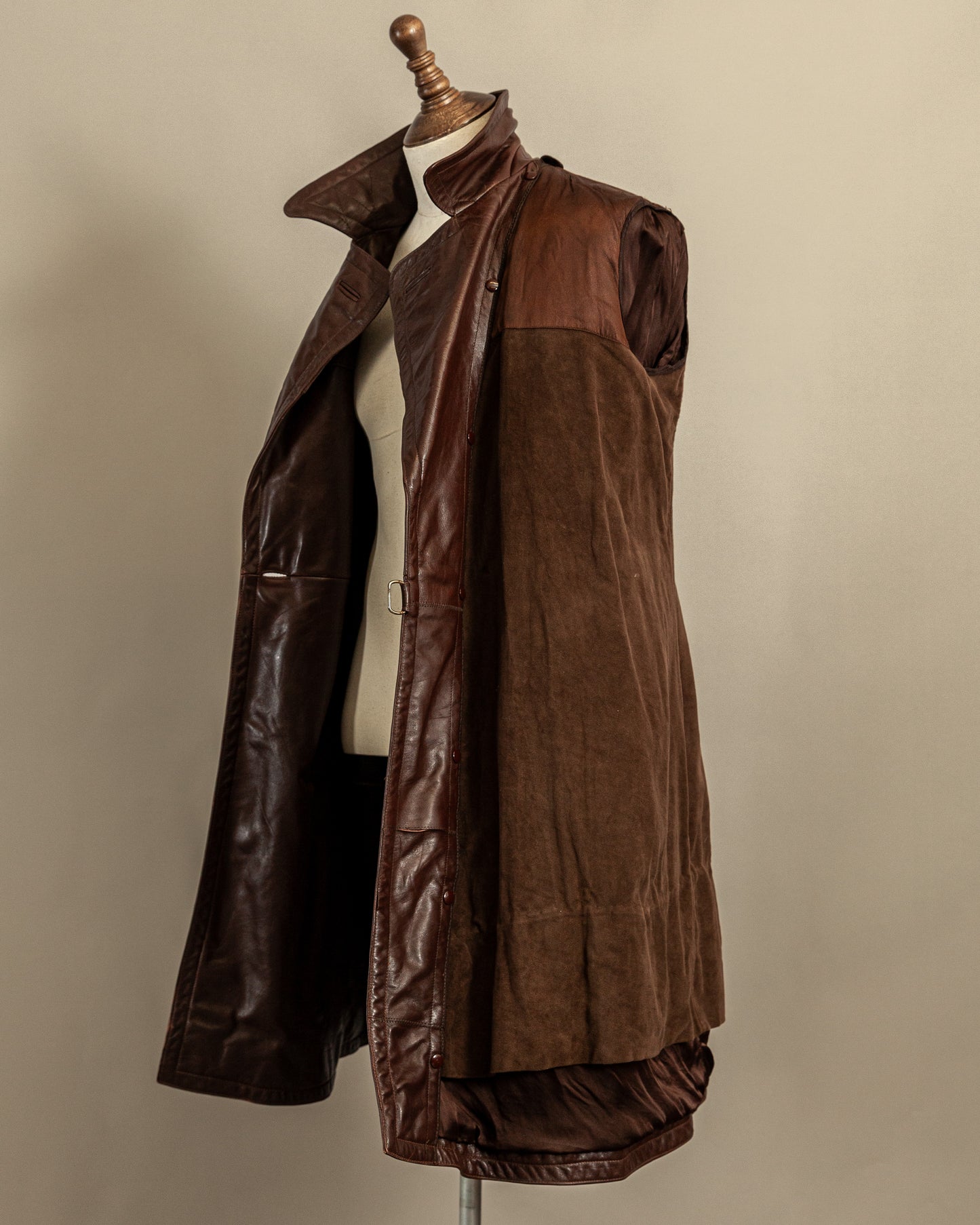
The horsehide is exceptionally heavy and dense, consistent with higher grade wartime leather intended for long service life. Naturally matured over eight decades, it carries a deep brown tone sitting between chestnut and dark seal, with layered tonal variation developed through sustained wear and exposure. The hide remains structurally strong, with confident panel definition through the body and natural softening through the sleeves. Grain variation, creasing and surface character reflect uncorrected wartime tanning methods and contribute to the coat’s depth and authenticity.
Inside, the coat retains its removable moleskin lining, fitted to provide additional insulation during prolonged outdoor wear in colder and harsher climates. This allowed the coat to be adapted depending on season and conditions, reinforcing its role as a serious working garment rather than a purely formal piece. The lining shows normal wear and light marking consistent with age, with a small fabric tear present as part of the coat’s working history. It remains fully functional and securely fitted when installed.
A defining feature is the original belt fitted with a Gutos Pforzheim buckle. Produced from the late 1930s through the wartime 1940s, this hardware appears repeatedly on officer grade private purchase garments and is widely regarded as a reliable indicator of period manufacture. The belt retains its leather covered buckle and fastening remains sound. The rear skirt incorporates a split vent secured with original popper fastenings, allowing movement while preserving the coat’s long, controlled line. Hand warmer pockets are lined in corduroy, a durable and practical material choice seen on serious utility garments of the era.
The coat has been cleaned and conditioned in house using specialist workshop methods. The horsehide is supple, resilient and rich in natural patina. Stitching, seams and structural components remain solid throughout. Overall condition is excellent vintage, with wear and interior marking entirely consistent with age and long term service rather than damage.
Key Identifying Features
• Exceptionally heavy 4.1kg horsehide with deep natural patina
• Chestnut to dark seal brown tone developed through age and exposure
• Original wartime Gutos Pforzheim belt buckle
• Removable moleskin lining for insulation in harsh climates
• Corduroy lined hand warmer pockets
• Broad lapels, shaped chest yoke and belted waist
• Rear skirt vent with original popper fastenings
• Wartime Ledermantel silhouette associated with senior officer private purchase
Garment Measurements (Laid Flat)
• Chest (armpit to armpit): 22.5 inches
• Sleeve length (underarm seam to cuff): 17 inches
• Sleeve length (shoulder seam to cuff): 26 inches
• Shoulders (seam to seam): 18 inches
• Back length (collar seam to hem): 43 inches
Best suited for a medium to large frame, approximately a 40 to 42 inch chest. Please compare with a similar coat for accuracy.
This coat stands as a serious example of wartime German officer private purchase leather outerwear. Its weight, materials, construction and preserved condition place it firmly within the upper tier of period leather garments, offering strong appeal to collectors and those with a considered appreciation for mid century military craftsmanship.